Last updated on March 28th, 2026 at 05:29 am
You Can't Become Whole By Only Strengthening What's Already Strong
On survival crutches, lopsided competence, and the parts of yourself that have been waiting for your attention
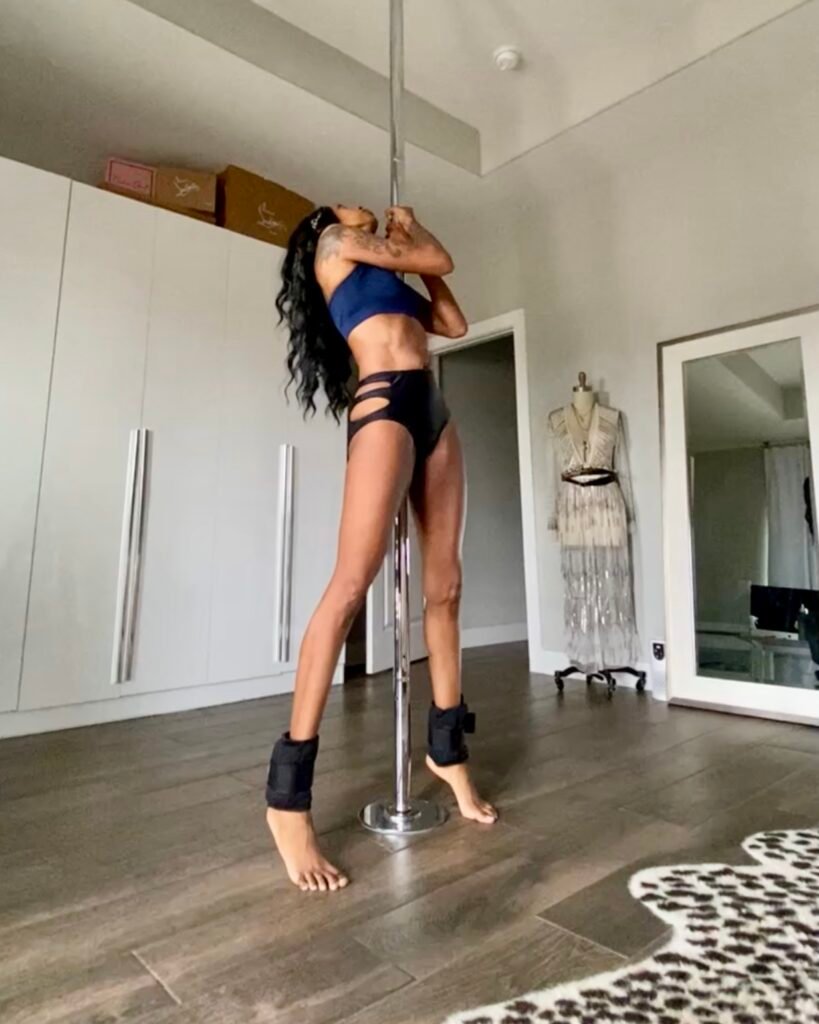
There’s a moment in pole training that humbles every dancer: the moment you switch sides.
You’ve spent months, maybe even years, on your strong side. Your dominant hand knows exactly where and how to grip. Your body understands your usual rotation of the spin. The movement feels earned, even graceful. You’ve worked hard for that natural flow.
Then you switch to your opposite side. And suddenly you’re a beginner again.
You feel awkward. Unsure. Gripping way too hard, or at times, not hard enough. You search your muscle memory file, but it comes up empty. You feel clumsy in a way that’s almost embarrassing—especially when you know you’re capable of better.
For a long time, my solution was simple: pretend like there wasn’t even another side to train. Why struggle with weakness when strength is right there, available and reliable when I need it?
And then one day, I realized I’d been doing the exact same thing in my life.
The Strength That Became a Cage
As midlife women, we don’t talk enough about how our greatest strengths can have a shadow side and how that shadow keeps us small and limited. So let me paint you a picture you might recognize.
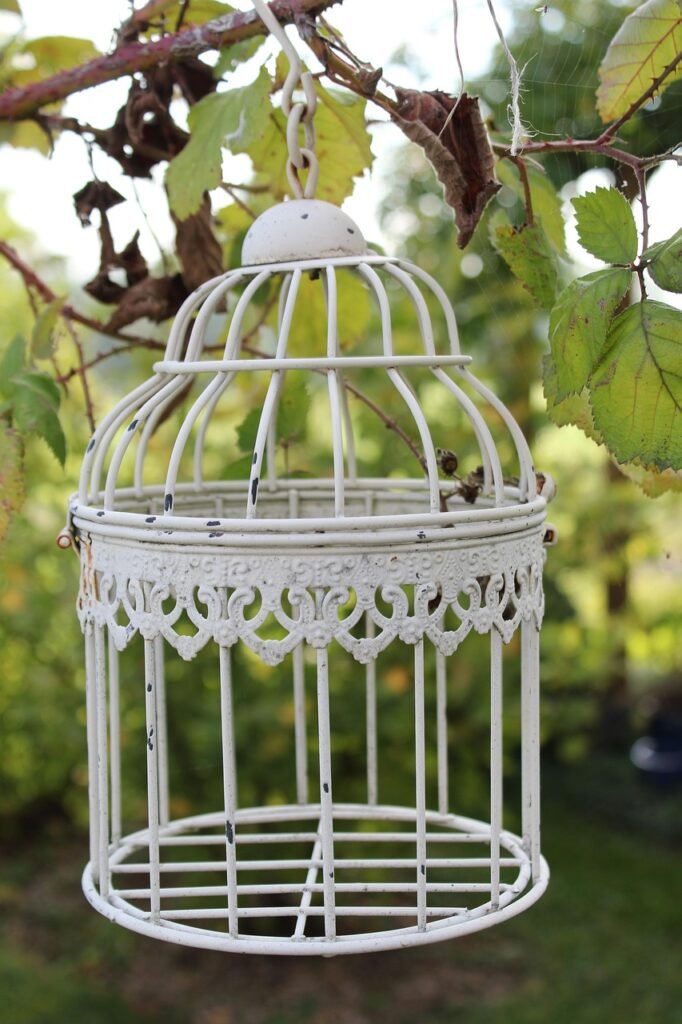
She never asks for help. Not because she doesn’t need it. But because needing help and not getting it has scarred her enough times that independence became armor. Now it’s just who she is. The strong one. The one who handles things.
She leads with logic while feelings beg to be recognized underneath. Because feelings got her into trouble. Feelings made her vulnerable. Feelings were used against her. And yet, feelings got her here. So she made “I’ll figure it out myself” her mantra and learned to think her way through EVERYTHING.
She performs. She produces. She shows up. Often for people who wouldn’t do the same. Rest feels like a luxury she hasn’t earned, or worse—a risk she can’t afford. Because the wrong people in her life have shown her time and time again what happens when she stops. She questions: will everything fall apart? Will she find out she’s not who she thinks she is without the busyness? Will she find out people who claim to love and care for her think differently of her if she stops performing?
She is extraordinarily good at all of this.
She is also exhausted in a way that sleep doesn’t fix. Because using strength to suffer depletes her in ways she cannot even consciously recognize. To her, she is just getting shit done.
Sound familiar?
But here’s what nobody told us: the very things that kept us safe and functioning during our hardest seasons can become the walls that keep us from the life waiting just on the other side of a door we have to choose to walk through.
Our strengths, unchecked, become our limitations.
This is what I call a survival crutch — a capacity that was once adaptive, even necessary, that we’ve leaned on so heavily it’s now doing the walking for us. We think it’s serving us. We want to believe that it protects us from getting hurt. But it’s actually keeping us from developing the range we need for the life we say we want and the wellbeing that we are worthy of.
What Happens When You Only Train One Side
Here’s what I know now that I wish someone had told me before I paid the cost:
When you rely on one way of operating for long enough, you forget there was ever any other option.
I had been figuring things out myself for so long inside my marriage that overfunctioning just felt like it was second nature. It wasn’t a choice anymore. It was a reflex. And honestly? How was I supposed to step back when stepping back had already shown me what would happen? He would falter. I would watch it happen. And then I would pick it up anyway, because the alternative of letting things fall apart felt worse than the weight I was already carrying.
So I carried it. For years.
Then the whole “soft girl” era started trending and something in me went completely still. My whole body screamed “I want that”.
Not the aesthetic but the actual, fully embodied experience of it. The ease. The receiving. The femininity that wasn’t contingent on whether anyone else was handling their part. And while I could recognize and embrace the wanting of softness, I also felt how far I was from it. I had been operating so deep in my masculine controlling, managing, and leading our household that softness felt like a language I’d never been taught. Rest felt like something I hadn’t earned. And being held in the full spectrum of my being? That felt like something that happened only to other women. The pattern I had built to survive had become the only way I knew how to exist.
And you cannot muscle your way into softness. Trust me, I tried. Multiple times. That’s just not how it works.
Softness required something my dominant side wasn’t allowed to practice: surrender. It required removing myself from the relationships and environments that only knew me as the one who holds it together. It required taking off the armor — not because it was safe to, but because I finally understood that the armor was also keeping out everything I actually wanted. The help. The rest. The reciprocity and care I had quietly been starving for while pretending I didn’t need it.
I was exceptional at showing up for everyone else. Celebrating their milestones. Anticipating their needs before they could even name them. Pouring into their becoming while my own quietly waited. And I told myself this was love. This was strength. This was who I was.
What I didn’t see was how lopsided I had become. I had developed a profound capacity for giving and almost none for receiving. I could hold everyone else and had no idea how to let anyone hold me. That’s not strength. That’s self-betrayal dressed up as virtue.
And here’s the part that cost me the most:
I stopped saying anything.
Early on, I would voice how their lack of reciprocity was affecting me and how much I needed something to shift. And something would shift, just long enough for me to exhale. And then it would quietly return to exactly what it had been before. So I stopped asking. I stopped naming it and told myself I was keeping the peace.
What I was actually doing was abandoning myself in slow motion.
I let the resentment build underneath the overfunctioning,the performing, and the proving of my worth. I kept showing up at full capacity thinking that IF I just gave enough, did enough, IF I could just finally be enough THEN the reciprocity would come. THEN the rest would come. THEN the softness would finally be earned.
But it doesn’t work that way.
You cannot earn your way into wholeness by perfecting your dominant side. You can only get there by turning toward the parts of yourself you’ve been leaving behind.
Your "Weak Side" Isn't Weak. It's Waiting.
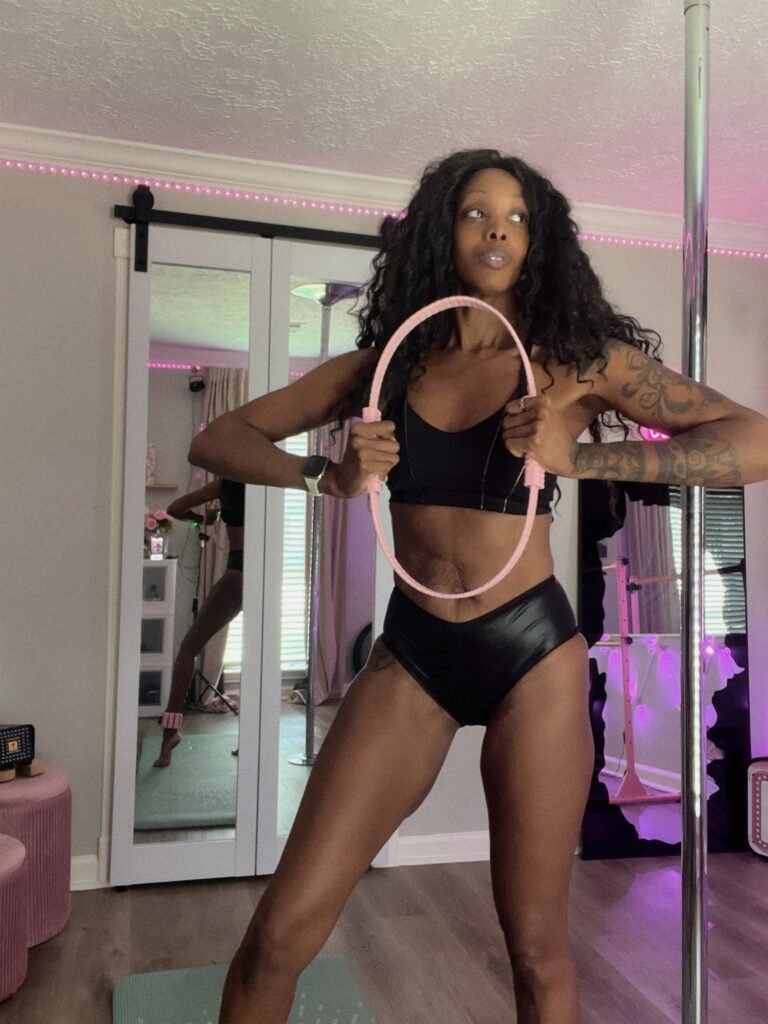
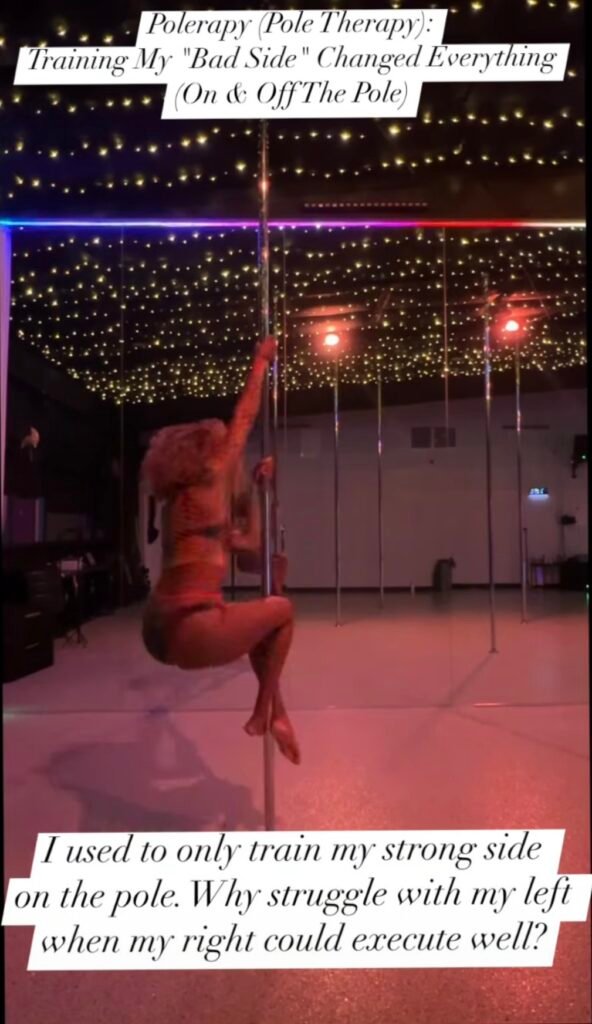
On the pole, I used to tell myself my left side was my “bad side.”
But it wasn’t bad. It was just underdeveloped. I had no idea what my left side was capable of. I hadn’t learned what it needed to perform at the level I wanted, so I avoided it like it was directly at fault. Every time I tried and felt clumsy or like a beginner, I retreated back to my right where I was competent, confident, and in control.
Here’s the truth I didn’t want to recognize at first: the pole doesn’t lie. It reveals exactly how you train, what you train, and how consistently. Life works the same way. What you avoid, you don’t overcome. You just outsource it to your dominant side until it breaks down. And when it does, you have no idea how to compensate because you never built anything to compensate with.
The parts of yourself you’ve been avoiding? They’re waiting. With more patience than you probably deserve, honestly. But patience isn’t infinite. Wait long enough and that’s when the tower moment arrives — the moment life stops asking nicely and starts dismantling what isn’t working whether you’re ready or not. I don’t say that to be harsh. I say it as the woman wearing the “ask me how I know” badge.
For midlife women especially, the underdeveloped side often looks like things we’ve normalized over so many years and decades that we can’t even see how directly they contradict the life we actually want to live:
Vulnerability. Letting someone see you struggle without immediately fixing it or minimizing it. This is one I’m still actively working on, especially as I venture into more aerial arts — silks, lyra, things that put me upside down in strange positions with what I can only describe as a “help, I’m lost” look on my face. But what I’m learning is that when I let my instructor actually see my need, she can help me move to the next step. The moment I stop performing competence I don’t have is the moment real progress becomes possible.
Receiving. Allowing help, care, and softness — without guilt, without immediately reciprocating, without keeping score. As someone who spent years doing it all, I understand how hard it is to release that responsibility. But you know what is even harder to release? The resentment that quietly builds when you don’t allow people to step up and reciprocate. And sometimes receiving isn’t passive. Sometimes it looks like enforcing boundaries about household responsibilities with your kids so that you actually get the support you need to show up for them the way they deserve.
Rest. Not collapsing into your bed. Not as something you earn after you’ve exhausted yourself. As a genuine, chosen renewal that you are simply allowed. For me, rest looks like a nighttime routine I protect. A few minutes of spinning on the pole to move the emotion out of my body. Dimming the lights. Pampering my face. Slipping into silky pajamas and climbing into a made bed with tea and something to read or write. I actively prepare myself for the rest I deserve, regardless of what the day looked like. Rest doesn’t wait for permission. I just had to stop waiting to give it.
Emotion. I’m talking the full range, not just the “acceptable” ones, not just the productive ones, but all of it. The anger for what happened. The grief for what didn’t. The joy you’re trying to talk yourself out of because someone somewhere has it worse. Feel it. All of it. You’re not too much. You’ve just been in the presence of company and rooms too small for everything you carry.
Asking. For what you need. For what you want. Out loud. Without a three-paragraph explanation for why you deserve it. I used to be the poster child for over-explaining my own worthiness — why I deserved reciprocity, why my needs were valid, why someone should meet me where I was. Now I have requirements and boundaries that do the asking for me. And if someone doesn’t have the willingness and the capacity to meet me there, I no longer plead my case for why they should.
Uncertainty. Sitting in the not-knowing without immediately filling it with a plan or a performance. This is hard in a world where the answer to everything is one Google search away and people expect visible movement as proof that you’re doing something. Being still — resting in the Sacred Pause without knowing what comes next — can feel terrifying. But what’s scarier is jumping into a relationship, a job, or a commitment just to look like you’re moving forward, when really you’re just trading one kind of stuck for another.
These aren’t weaknesses.
They are capacities you haven’t felt safe enough, supported enough, or practiced enough to develop. And they are also your greatest opportunities — because the woman you’re becoming needs them.
What Training Both Sides Actually Builds
When I finally committed to training my left side seriously — not as punishment, not as a grudging afterthought, but with the same intention I brought to my right — something unexpected happened.
I didn’t just get better on my left side. I got better overall.
And I want to be honest about what that actually looked like because it definitely did not look like progress at first. In the beginning, I was adding extra transitions just to get back to my right side so I could execute a move I actually trusted myself to land. I was working harder, using more energy, taking the long way around — all to avoid spending real time on the side that needed me most. Sound familiar?
Think about how many times you’ve done the same thing in life. How much energy you’ve spent maintaining the appearance of strength when the moment was actually asking you to surrender to something softer, something less practiced, something that needed your attention instead of your performance.
Training both sides taught me things my dominant side never could:
Adaptability. When you only have one way of moving, you spend enormous energy forcing every situation to accommodate that one way. I know this on the pole and I know it in my body. And I know it from years of contorting circumstances, relationships, and myself to fit the only I knew how to operate. Developing your underdeveloped side means you can finally respond to what a moment actually needs instead of defaulting to what you’ve always done. That’s not weakness. That’s range.
Resilience. I want to be careful here, because resilience has been weaponized against women like us. It has been used to celebrate our capacity to endure — as if enduring were the goal in life. While yes, people and situations have shown you that hyperindependence is necessary sometimes, it will have you relying solely on yourself, your strong side, your armor, until one day you simply can’t anymore. And then what? I had to learn that real resilience isn’t how much you can suffer through alone. It’s having enough range that when one part of you is depleted, another can carry you forward. The wear and tear of only ever relying on your strength doesn’t always announce itself. It accumulates quietly. And eventually, your greatest strength becomes your most significant vulnerability.
Humility. Being a beginner again — regularly, on purpose — changes your relationship with growth in ways that are hard to describe until you’ve felt it. You stop requiring yourself to already be good at something before you’re willing to try. You stop making “I’m not ready” mean “I’m not allowed.” You start showing up for the learning before you’ve earned the mastery. You allow those that are there to guide you to actually serve their purpose. That alone will change your life.
Integration. We are so conditioned to niche ourselves. To be one thing and be that thing completely, as if claiming the full breadth of who we are is somehow greedy or confusing. You become a mother and suddenly the world acts like you can’t also be a multi-dimensional, sensual, ambitious woman who puts herself first so she can pour into others from a cup that’s actually full. You spend years as the strong one and forget you’re also allowed to be soft. You build a career and lose track of the parts of yourself that have nothing to do with productivity. Integration isn’t about doing more. It’s about refusing to keep amputating pieces of yourself for the comfort of people who only want one version of you.
How to Start Conditioning What You've Been Avoiding
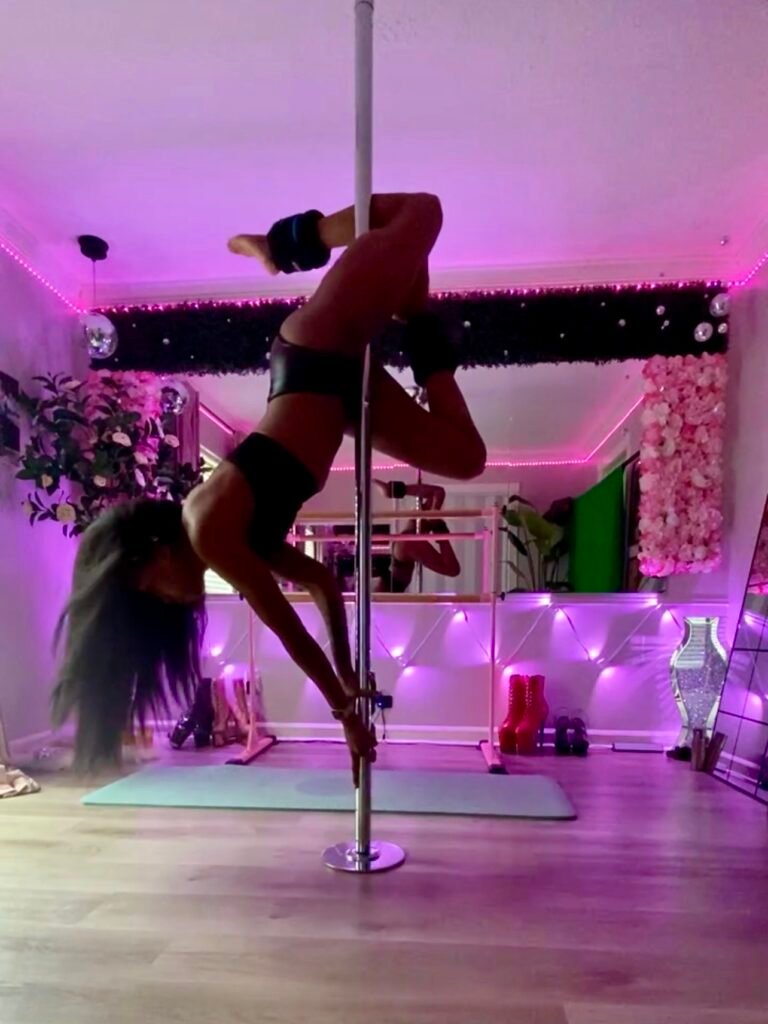
This isn’t about abandoning your strengths. Your strength, your independence, your resilience — these are real. They carried you here. They matter. Conditioning your “bad side” is about developing alongside the good, so you’re no longer limited by what you’re already great at.
Here’s how to begin:
- Name what you’ve been avoiding. Not in judgment or shame, but in deep honesty. Where do you feel the resistance? What do you immediately shy away from? What feels ‘so not you’ that you’ve never even tried it? That’s usually your underdeveloped side pointing at itself.
- Start smaller than feels productive. The goal isn’t mastery of everything nor is perfection. The goal is to become familiar with what feels aligned. Five minutes of genuine rest — not sleep, but intentional stillness. One sentence of honest need. One moment of letting someone help without immediately helping back. Small is the point.
- Expect to feel clumsy. So often, we take this as a sign we’re doing it wrong or that it’s not the path for us. Trust me, I’ve been there more times than I want to admit. But, this is the exact feeling of developing something new. Working through clumsiness is the practice. If you already felt fluid and natural, you wouldn’t need to practice it.
- Watch where the resistance shows up. Judgment. Impatience with yourself. The urge to quit and go back to what you’re good at. The sudden memory of something urgent you need to do instead. And in all honesty, I just called out myself with that last one. This is the resistance doing its job. Notice it. Stay anyway.
- Celebrate the attempt, not the outcome. You are not trying to become equally skilled at everything. You’re trying to expand the range of what you can do without the expectation that you will master it all. The micro-win is showing up for the part of yourself you usually don’t. Celebrate that ish!
The Integration: You Can't Selectively Become
Here’s what training both sides of the pole taught me:
You cannot become whole by only strengthening what’s already strong.
Let that last sentence really sit with you for a moment because we often believe and go all in on the opposite. Because the woman you are becoming? The one who is softer and more powerful, more honest and more free, more rested and more fully alive — she needs all of you. Not the polished parts only. Not the parts that are already confident and performing and capable.
She needs the parts you’ve been afraid to look clumsy in.
The emotions you’ve been managing instead of feeling. The help you’ve been refusing instead of receiving. The rest you’ve been earning instead of simply taking. The vulnerability you’ve been performing instead of actually inhabiting.
Wholeness isn’t about becoming perfect at everything. It’s about showing up for all of yourself — especially the parts that have been waiting in the wings, underused, undervalued, underdeveloped for your acknowledgment that they exist.
Because your real power isn’t in perfecting what you’re already good at. It’s in finally honoring what has been asking for your attention all along.
What “weak side” of yourself are you finally ready to condition? I’d love to hear in the comments.
A note on the pole:
You don’t need to know anything about pole dancing to understand this. But if you’re curious — yes, I train both sides now. My left is still behind my right. It probably always will be a little. But it’s no longer absent from the work. And that has made all the difference.

Join the Well Curated Life
Thank you!
You have successfully joined our subscriber list.